The world of tricone bits looks similar, but each application hides engineering differences. Many buyers often wonder — are they really that different?
Tricone bits for mining, water wells, and HDD differ mainly in bearing design, sealing type, nozzle configuration, wear protection, and material composition, while IADC codes reflect formation hardness and tooth type, not industry.
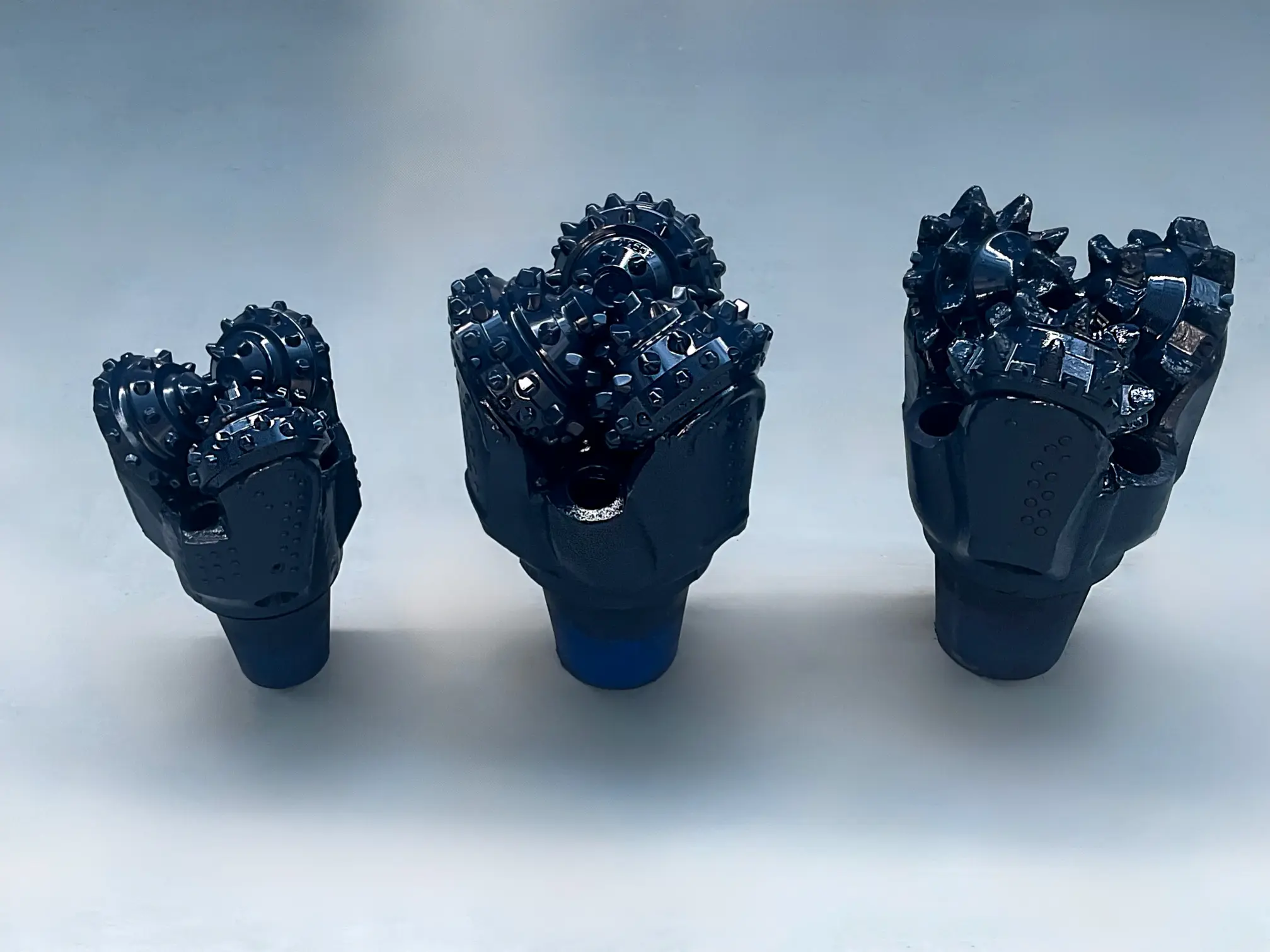
When I first started selling drilling tools, I often saw customers using the same bit for different jobs. Some worked fine, others wore out too quickly. That made me start asking: what’s really behind these differences?
How does each application environment affect tricone bit design?
At first glance, a tricone bit is just a tool with three rolling cones. But the environment it works in changes everything.
Each drilling application — mining, water well, and HDD — operates in a different environment, requiring different levels of durability, lubrication, sealing, and material strength.
Mining Environment
Mining drilling usually happens in open-pit or underground sites. The rock is hard, the air is dusty, and there is often no mud. The bit faces constant impact and vibration. Mining tricone bits are built for impact resistance and cost efficiency, not long-term precision.
They often use journal bearings with air cooling, and no internal lubrication reservoir, since compressed air is the main circulation medium.
| Feature | Mining Drilling |
|---|---|
| Formation | Hard or very hard rock |
| IADC Code | 6–8 (TCI teeth) |
| Bearing Type | Mostly open or non-sealed bearings |
| Tooth Type | TCI for wear resistance |
| Cooling | Air or foam, not mud |
| Jet Design | Air holes or fixed jets |
| Protection | Minimal hardfacing (often limited to cone edges or root area) |
| Material | Bit body made from 4140/4145H forged steel; cones of 8620 or 8720 carburized alloy; standard-grade tungsten carbide inserts for impact resistance |
| Bit Life | Shorter, replaced frequently |
Water Well Environment
Water well drilling happens vertically with continuous fluid circulation. Bits must maintain penetration and handle longer depths. Sealed bearings and replaceable nozzles are important.
Some water well bits also use grease-lubricated elastomer (rubber) sealed bearings to extend lifespan in deeper wells.
| Feature | Water Well Drilling |
|---|---|
| Formation | Soft to medium-hard |
| IADC Code | 1–4 steel teeth for soft layers, sometimes 5 TCI for harder sections |
| Bearing Type | Elastomer (rubber) sealed bearings |
| Tooth Type | Steel or TCI depending on ground |
| Cooling | Mud or water circulation |
| Jet Design | Replaceable nozzles |
| Protection | Moderate hardfacing |
| Material | Forged 4145H or 15CrNiMo body; 8620 carburized steel cones; medium-grade tungsten carbide inserts or hardened steel teeth; nitrile rubber seals |
| Bit Life | Medium lifespan, economical focus |
I learned on one water well project that switching from open bearings to sealed bearings improved drilling speed and reduced downtime by half.
HDD Environment
HDD (Horizontal Directional Drilling) is very different. It’s horizontal, with long, controlled paths. Bit changes mid-project are expensive, so reliability comes first. HDD bits often use metal-sealed bearings, pressure-compensated lubrication, and heavy wear protection.
They are also built with enhanced gage protection (tungsten carbide inserts and hardfacing at the shirttail) to resist side-loading.
| Feature | HDD Drilling |
|---|---|
| Formation | Medium-hard to hard, mixed layers including cobble, gravel, sandstone, clay |
| IADC Code | 1–6 depending on formation (steel for soft, TCI for harder/mixed layers) |
| Bearing Type | Metal sealed or Rubber sealed bearings |
| Tooth Type | Steel or TCI depending on formation hardness |
| Cooling | Mud with bentonite |
| Jet Design | Replaceable, directional flow |
| Protection | Heavy hardfacing, gage and shirttail protection |
| Material | High-grade alloy 15CrNi4Mo or 18CrNiMo7-6 body; 8620/17CrNiMo6 carburized cones; premium fine-grain tungsten carbide inserts; Viton or metal-O-ring seals for high temperature and pressure |
| Bit Life | Longest, premium quality |
HDD often requires IADC 5–6 TCI teeth for mixed layers to ensure cutting efficiency and long service life, while soft formations may still use IADC 1–4 steel teeth.
Why do some tricone bits overlap between applications?
Many customers ask why water well bits are sometimes used in HDD, and vice versa.
Both HDD and water well bits share similar drilling conditions: fluid circulation, sealed bearings, and soft to medium-hard formations. A high-quality sealed TCI or steel bit can work for both applications depending on formation.
However, HDD bits experience higher side-loads and torque, so water well bits may wear faster if used horizontally or in long crossings.
| Aspect | Water Well | HDD |
|---|---|---|
| Cooling | Continuous mud circulation | Continuous mud circulation |
| Sealing | Rubber seal | Metal seal or Rubber seal |
| Torque | Moderate | Higher, sustained |
| Bit Size | 6"–12" typical | 6"–17" common |
| Priority | Drilling speed | Stability and wear resistance |
| IADC Use | 1–4 steel, 5 TCI | 1–6 steel/TCI depending on formation |
| Material | Medium-grade 4145H/8620 steel, rubber-sealed bearings | High-grade 15CrNi4Mo/17CrNiMo6 steel, metal-sealed bearings, deeper carburized case depth |
HDD versions usually include stronger seals, thicker hardfacing, and directional nozzle configuration. Properly specified bits work for both water well and HDD projects.
What should buyers focus on when selecting tricone bits?
Even though tricone bits look similar, the right choice depends on both formation and drilling method.
Buyers should always specify hole size, IADC code, bearing type, connection, and intended application.
For HDD specifically, it also helps to specify pilot hole diameter and rig torque capacity, so the manufacturer can optimize bearing load and nozzle size.
| Parameter | Description |
|---|---|
| Hole Diameter | Exact bore size (in/mm) |
| Formation Type | Soft / Medium / Hard |
| IADC Code | 1–6 depending on formation and application |
| Bearing Type | Open / Rubber seal / Metal seal |
| API Connection | 2 7/8" Reg, 3 1/2" Reg, etc. |
| Application | Mining / Water Well / HDD |
Providing these details ensures the manufacturer optimizes nozzle size, seal type, material grade, and surface protection for the application.
Conclusion
Tricone bits differ mainly in sealing, bearing, wear protection, material composition, and IADC selection according to formation. HDD may use IADC 1–6, water well 1–5, and mining 6–8.
Mining bits (IADC 6–8) are generally air-cooled with open bearings, while HDD and water well bits (IADC 1–6) are fluid-cooled with sealed bearings.
The above comparison explains the differences in theory, but actual selection should always depend on the specific project conditions, drilling rig parameters, and budget.
For example, metal-sealed HDD bits offer longer lifespan and better reliability, but they are more expensive. Many HDD contractors still prefer rubber-sealed bearings for standard crossings — and they perform very well in practice.
So, rather than one “best” type, the right tricone bit is the one that matches both the formation and the customer’s operating plan.
👉 Click here to explore our water well tricone bit options and get in touch with us for a quote or expert recommendation.